






Case 06 · Mental health · Kazan Federal University · Russia
Platform psychological self-regulation
A service for a center that helps people with anxiety disorders. A clinical method turned into training a person can follow, with a doctor watching.

The screen of the day: a well-being check-in and the personal practice, seen from a bird’s height.
Goals and principles
Problem. Stress runs in the background of modern life. Bad moments and negative emotions at work, among people and at home build up psychological and emotional tension. That tension turns chronic, and chronic stress brings a long list of psychosomatic illnesses. The project set out to block the excessive emotional response and to damp down the physical symptoms that travel with it.
The author of the method. Valery Ivanovich Lykov is a psychotherapist, holds a Russian candidate of medical sciences degree, roughly a PhD, and is an associate professor in the department of psychiatry and addiction medicine at a pediatric medical university. He studies the levers that act on stress: autogenic training, meditation, yoga, hypnosis, bioenergetics. On that base he built his own method for regulating the psyche in anxiety disorders.
Goal. Sharpen the ways a person can regulate their own psyche under particular conditions: during emotional stress, and in psychosomatic and borderline mental disorders. What the person works on is the bodily side of the stress response and the physical symptoms stress produces, from the simple ones through to the complex, shifting body sensations that have no clear physical cause.
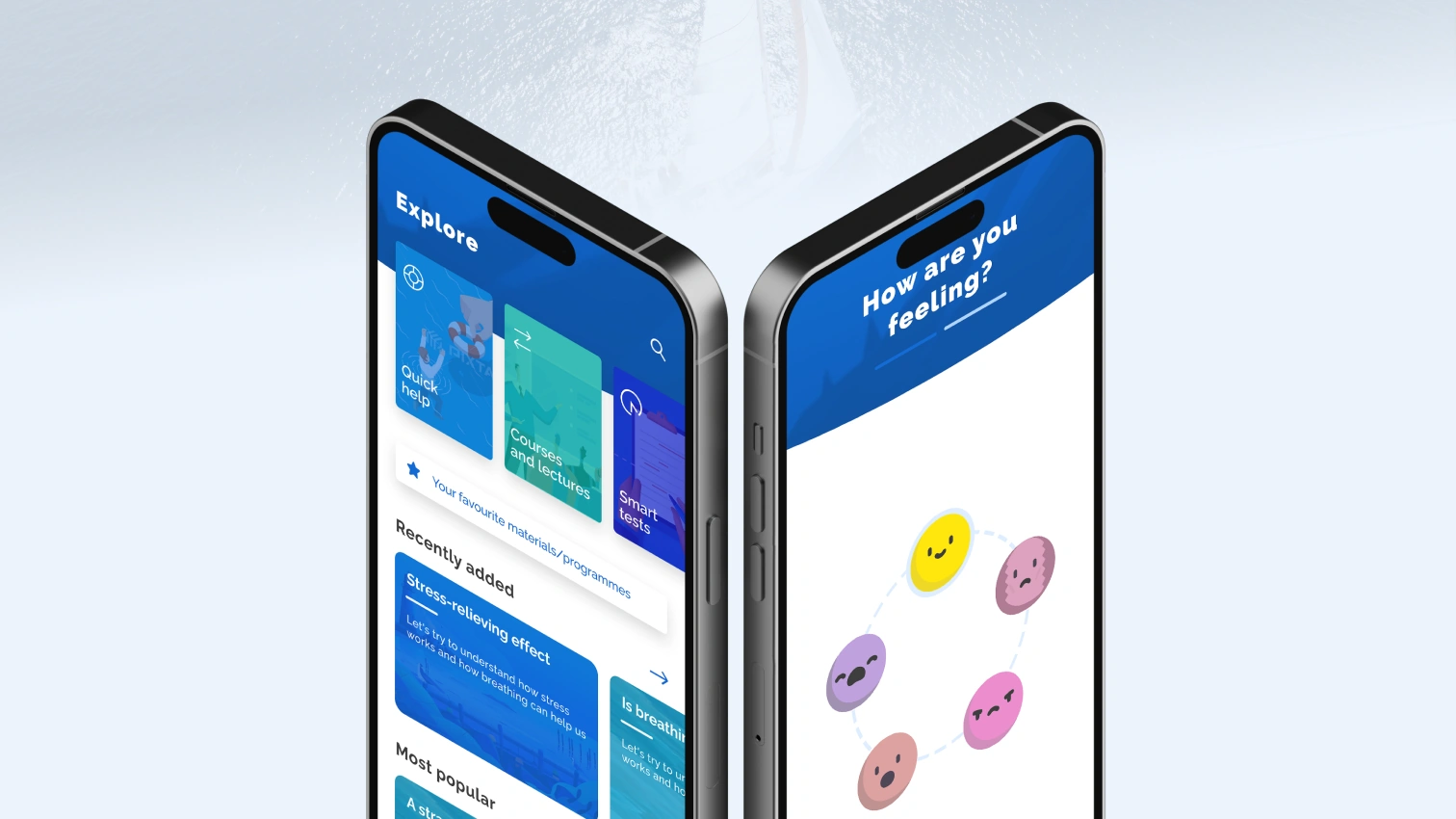
The Explore shelf and the ring of emotions. The platform opens with one question, “how are you feeling?”, and the form comes after that.
Process
The client’s first stage is profiling: how heavy the state is, what exactly is disturbed, which goals to set. The platform runs an interactive testing algorithm for that, and it picks the treatment plan the doctor has broken into weekly sprints.
How are you feeling?
Self-assessment, three steps to the first week
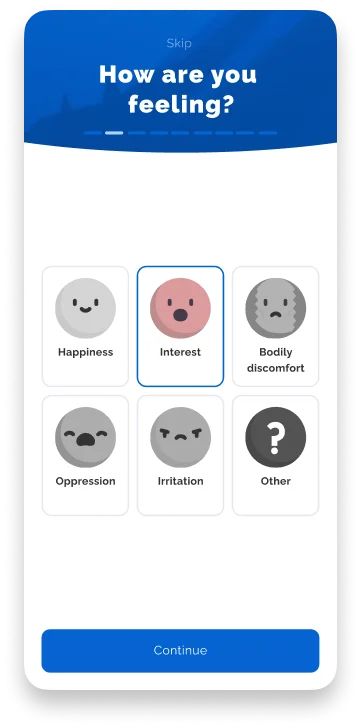
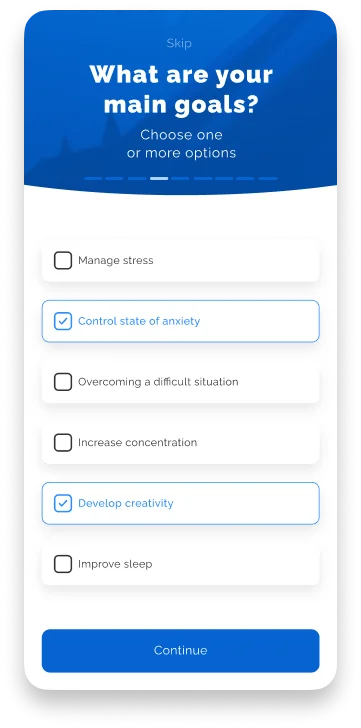
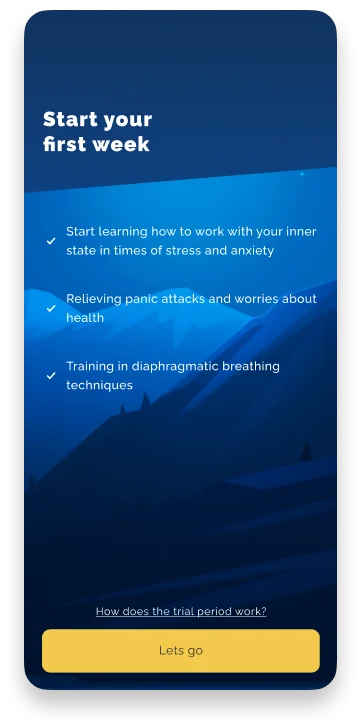
Interface up close
The platform is assembled from four parts of the method, and each part became a flow of its own in the app.
-
Sprints under supervision
After the testing, every sprint is reviewed by the doctor and adjusted when it needs adjusting.
-
Practice and exercises
The cyclical part: practical theory and exercises. The tracker shows how the person’s state changes at each stage of the work.
-
Mood diaries
The person logs their own state, through mood diaries and repeat tests.
-
Consultations with a doctor
Detailed private consultations with the psychotherapist, for the moments when they are needed.
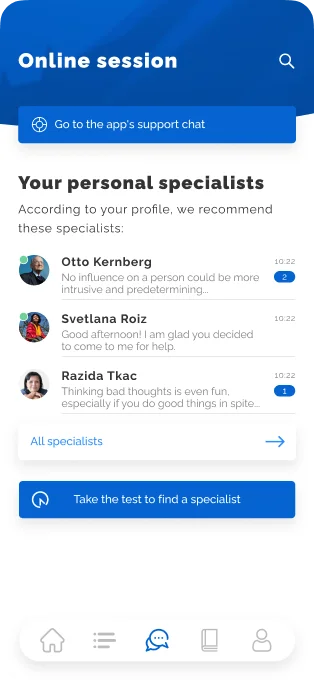
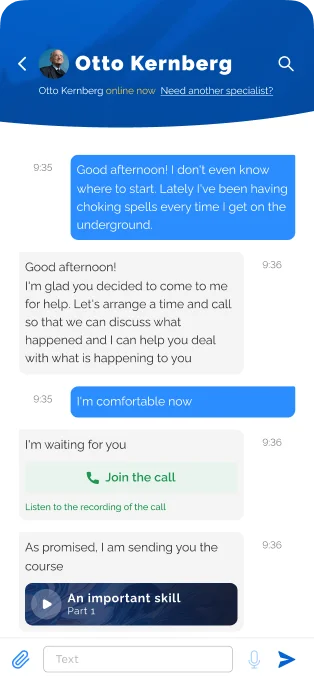
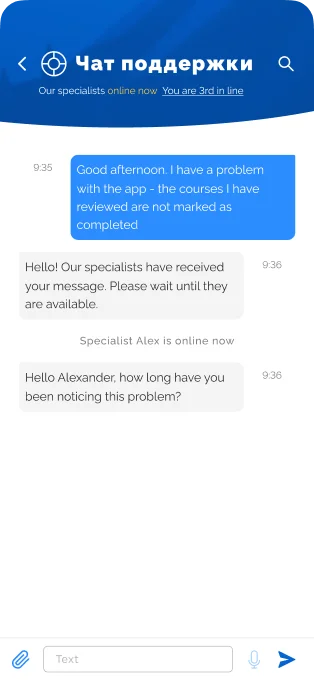
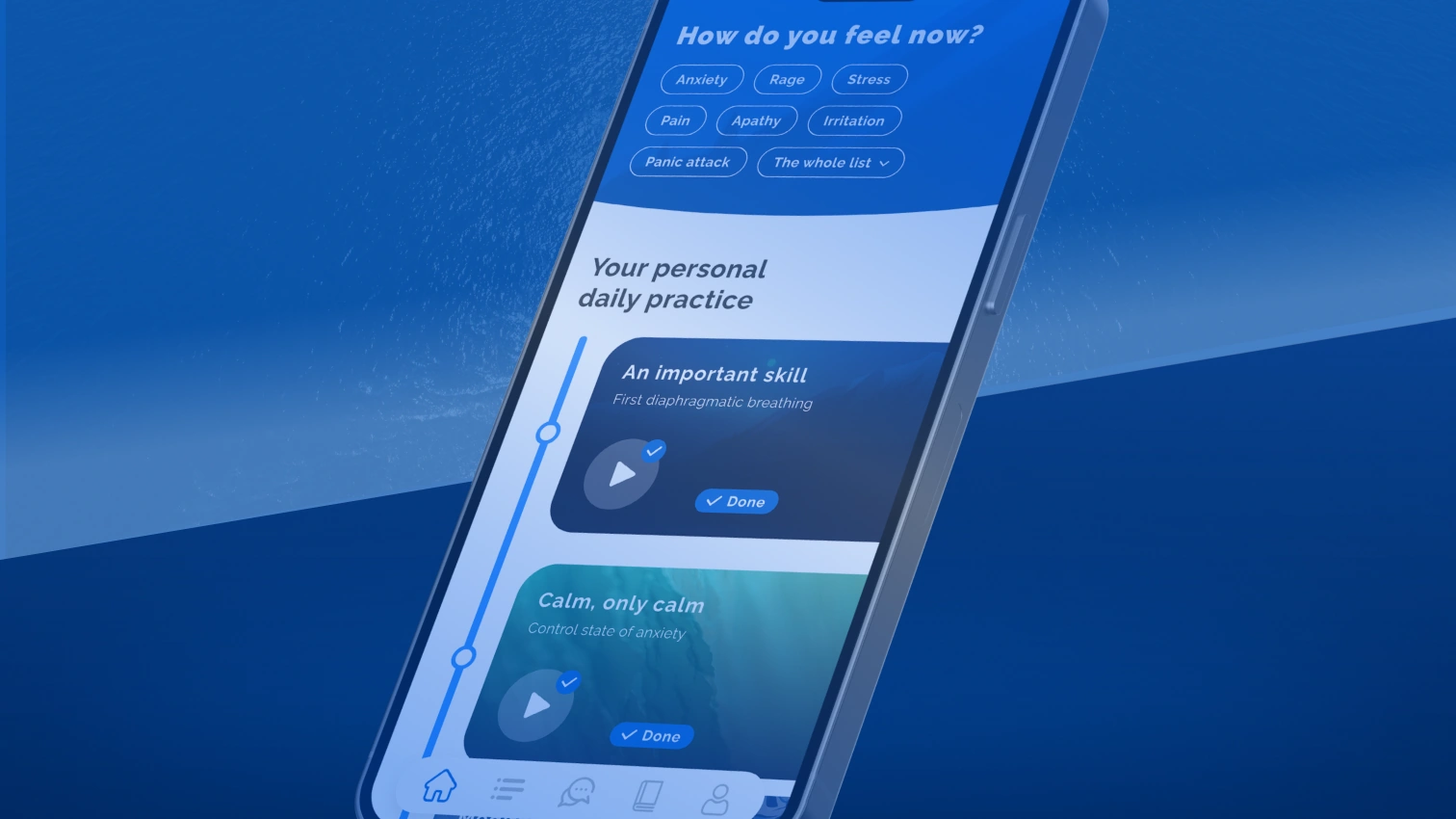
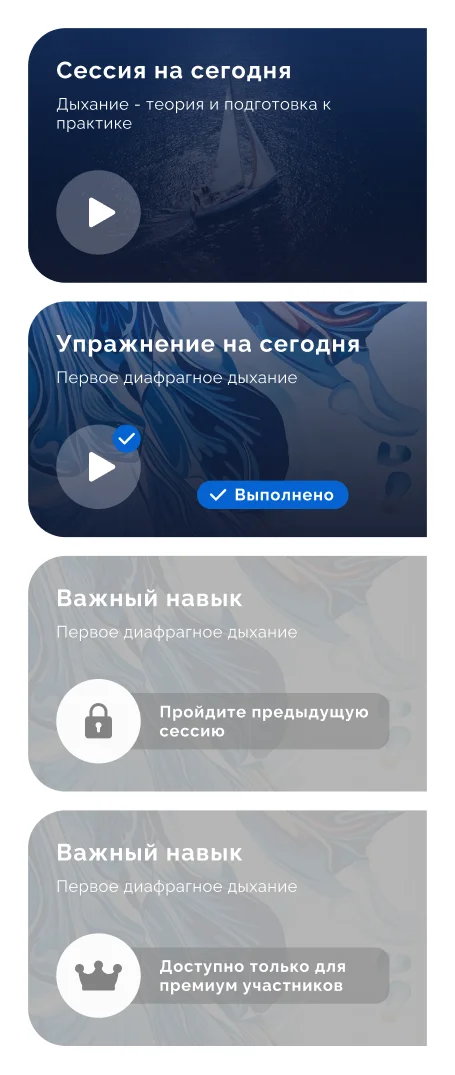
The daily practice: a state check-in and the exercises of the day. The sprint reads as a path, one step at a time.
Type and styles
Humanist Raleway, soft card radii and the emotion faces. Styles for a product people hand personal things to.

-
 Happiness
-
 Interest
-
 Bodily discomfort
-
 Oppression
-
 Irritation
-
 Other
Other



Outcome
A tool for helping people
What came out of the work is a platform built for the widest possible audience. That was the point: it had to work for a person with no medical training. At its core it is a set of plainly written methods and exercises done under a doctor’s eye: they help a person regulate their own body and mental state, and get “above the stress” and take it out of their life.
The case is published without metrics. In mental health the numbers belong to the doctors, and I am not the person to report them. I can go through the process in a call.